Damp and mould: your rights as a tenant in England
Direct answer
Landlords already owe applicable repair, fitness, and serious-hazard duties in damp and mould cases. The fixed Awaab's Law deadlines currently apply in social housing; the future private-rented-sector regime has not commenced.
A private landlord may have legal duties to deal with damp and mould where repair or fitness law applies, while the council can assess hazards under HHSRS. Responsibility depends on the tenancy, cause, notice, and evidence. The current social-housing Awaab's Law deadlines do not bind private landlords.
The legal framework: three overlapping duties
Damp and mould can engage three overlapping legal routes. Their scope, decision-maker, and remedy are different.
- Landlord and Tenant Act 1985, section 11: landlords within its scope must keep the structure, exterior, and specified installations in repair. Damp caused by disrepair to a covered item may engage the duty; notice and a reasonable opportunity to carry out the work usually matter in a tenant-held property.
- Landlord and Tenant Act 1985, sections 9A and 10: for tenancies within scope, damp, ventilation, heating facilities, and prescribed hazards can be relevant to whether the home is fit for human habitation. A court decides unfitness on the evidence.
- Awaab's Law: current fixed deadlines cover specified hazards in social housing. The Renters' Rights Act 2025 provides for a future private-rented-sector regime, but the roadmap lists it as to be confirmed and subject to consultation.
Types of damp: structural vs condensation
Condensation and mould can have interacting causes, including building defects, heating or ventilation deficiencies, occupancy, and moisture production. A council HHSRS assessment identifies hazards and relevant deficiencies for enforcement purposes; tenancy or civil liability may require separate evidence.
- Usually the landlord's responsibility: penetrating damp from a damaged roof, chimney, or wall; rising damp from a failed damp-proof course; damp through cracked window frames; leaks behind walls; condensation from broken or missing ventilation; mould from inadequate heating infrastructure.
- Where tenant behaviour may be relevant: black mould where warm moist air meets cold surfaces; mould around single-glazed windows without trickle vents; bathrooms without extractor fans where the tenant rarely ventilates; mould in wardrobes against poorly insulated external walls.
Health impact and HHSRS classification
Under the Housing Health and Safety Rating System (HHSRS), damp and mould is a recognised hazard. A local authority scores the likelihood and severity of harm. A Category 1 finding requires it to take one of the statutory enforcement courses available under Part 1 of the Housing Act 2004.
Exposure to black mould can cause respiratory infections, worsened asthma, allergic rhinitis, and eye or skin irritation, with children, elderly residents, and those with respiratory conditions most at risk. Where health has been affected, personal-injury damages in a disrepair claim can be significant.
What to do: step-by-step escalation
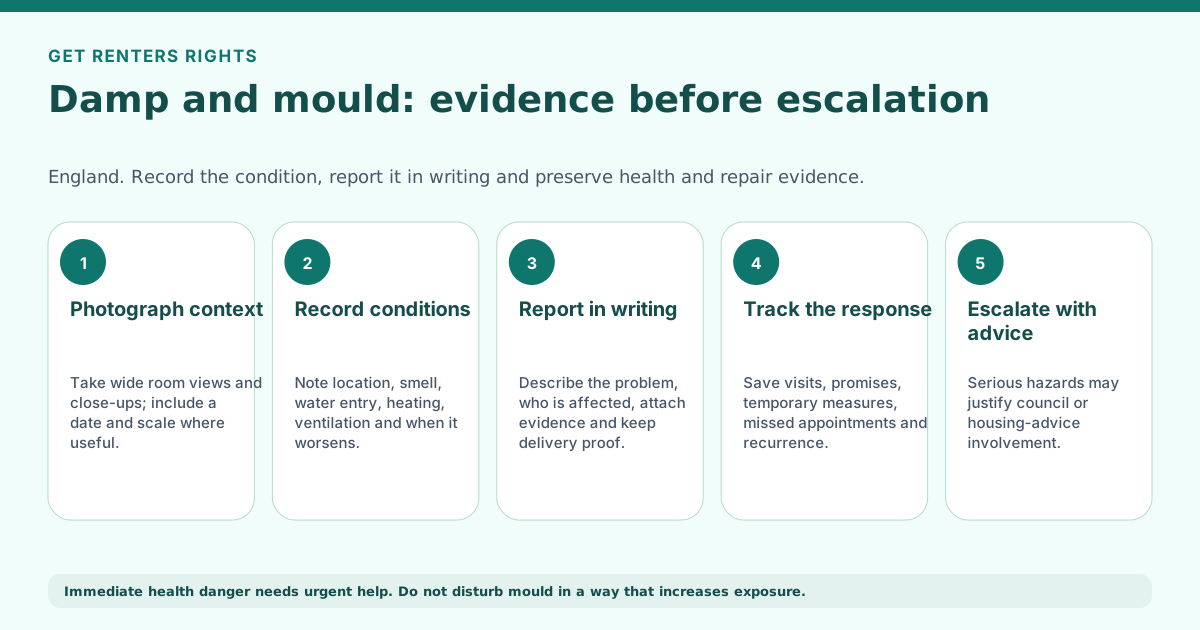
Build a paper trail from day one - it is what every later route relies on.
- Report it in writing immediately (email or text), describing the location and extent, with dated photographs. Keep the sent copy.
- Give a deadline matched to the risk: urgent health hazards justify same-day escalation to the council; less urgent damp should still be chased promptly in writing.
- Document everything: photograph the mould weekly with the date visible, keep records of related medical appointments and damaged belongings.
- Contact your council's environmental health team if the landlord fails to act. It can inspect and score hazards under the HHSRS. If it identifies a Category 1 hazard, it must take one of the appropriate statutory enforcement actions; that is not always an improvement notice.
- Get advice about a housing-conditions claim for works and damages. Liability, track, costs, funding, and valuation depend on the evidence; some authorised providers may offer a conditional fee agreement, but availability and terms vary.
- Watch for retaliatory eviction: keep the complaint and notice timeline. A saved pre-1 May 2026 Section 21 notice can be restricted only if the section 33 Deregulation Act 2015 conditions are met. Under post-reform Section 8, retaliation is not a standalone answer to every ground, but repair evidence may support a counterclaim, factual challenge, set-off, or a discretionary-ground reasonableness argument.
Free checkers
- Damp and mould checker
Check your landlord's legal duty and available escalation options. - Repairs checker
Check whether your landlord is in breach of their broader repair duty. - Awaab's Law explained
The current social-housing deadlines and the uncommenced private-rented-sector phase. - Tenant rights in England
All eight core tenant rights with a free checker for each. - Renters' Rights Act 2026 guide
Every major reform from 1 May 2026, including Awaab's Law.
Damp and mould questions
- Your landlord refuses to fix damp: your options
Section 11, the fitness duty, council Environmental Health and court routes to force action. - Is your landlord responsible for mould?
When mould engages landlord duties: disrepair, fitness, causation, evidence and escalation.
Related guidance inside this topic
- If your next step turns on damp, mould, and fitness duties, read damp and mould repair escalation guide.
- For the dates, forms, and evidence behind damp, mould, and fitness duties, see black mould tenant rights guide before you respond.
- If this issue overlaps with damp, mould, and fitness duties, check landlord repair obligations guide to compare the legal tests.
- For a fuller breakdown of damp, mould, and fitness duties, use landlord repairs checker for the underlying rule set.
- If you need the route-specific rules on damp, mould, and fitness duties, start with council environmental health landlord repairs so you can check the dates and documents against your own case.
Sources used for this guide
These are primary legislation and public guidance sources that support the legal-information framework used on this page.
- Landlord and Tenant Act 1985
Primary statute for core landlord repair duties, including structure, exterior, installations, heating, water, gas, and sanitation. - Homes (Fitness for Human Habitation) Act 2018
Primary statute adding a fitness-for-human-habitation duty for rented homes in England. - Housing Act 2004
Primary statute for tenancy deposit protection, HMO licensing, and local authority housing hazard enforcement. - GOV.UK: repairs in private renting
Government guidance on landlord repair responsibilities and what tenants can do when repairs are not carried out. - Shelter England: repairs
Independent housing charity guidance on repair duties, evidence, and escalation when a landlord does not act.
Related articles
- Tenant rights in England: complete guide
The main overview page linking eviction, repairs, deposit protection, rent increases, and illegal eviction rights together. - Renter questions answered
Plain-English answers to the most-asked questions from private renters in England: eviction, deposits, rent increases, repairs, illegal eviction, and pets. - Awaab's Law explained for private renters
How Awaab's Law interacts with existing repair and fitness duties, and why implementation timing still matters. - How long does a landlord have to fix heating?
How long landlords have to fix heating in England: reasonable time, urgent winter loss, section 11 duties, evidence, and escalation routes. - HHSRS hazards in rented property
HHSRS hazards in rented property explained: damp and mould, excess cold, fire, electrical risks, falls, council inspections, and tenant evidence.
Common questions
- Is my landlord legally required to fix damp and mould?
- A landlord can be legally responsible where damp or mould results from relevant disrepair or makes a qualifying rented home unfit for human habitation. The applicable duties are in sections 11, 9A, and 10 of the Landlord and Tenant Act 1985. Responsibility depends on the cause, tenancy, notice, and facts; the fixed Awaab's Law deadlines currently in force for social landlords do not yet bind private landlords.
- What should I do first if I find damp or mould?
- Report it to your landlord in writing - email, text, or letter - with the date clearly stated and photographs attached. Keep a copy. This creates the written notice that matters for existing repair and fitness duties. Do not rely on a verbal report; you need evidence of when the landlord was notified.
- My landlord says the mould is caused by my lifestyle: is that true?
- Sometimes condensation mould is linked to tenant behaviour such as insufficient ventilation or drying clothes indoors. But landlords often use this as a blanket excuse when the real cause is inadequate insulation, poor heating, or penetrating damp. An HHSRS inspection by the council's environmental health team can determine the actual cause independently, and where structural factors contribute, the duty to repair falls on the landlord regardless of any tenant behaviour.
- How long does my landlord have to fix damp and mould?
- For a private tenancy there is no single fixed period for every damp or mould case. Where an existing repair duty applies, the landlord generally has a reasonable time after notice, judged against the cause, required work, and urgency. Serious health or safety risks justify faster action and council escalation. The current social-housing Awaab's Law periods do not bind private landlords.
- Can I withhold rent because of damp and mould?
- This is risky and not generally advisable without legal advice. Withholding rent can lead to a rent-arrears possession claim even where the underlying repair dispute is valid. The safer route is to keep paying rent, document the issue, put the landlord in breach through formal written reporting, and pursue a housing disrepair claim or environmental health complaint. A disrepair counterclaim can reduce any arrears figure if possession proceedings are brought.
- What can I claim if my landlord refuses to fix damp and mould?
- You may be able to claim a court order requiring specific repairs; damages for the period of disrepair based on a reduction in the property's rental value plus any personal injury or damage to belongings; and the cost of storage or temporary accommodation if the property became uninhabitable. Many housing disrepair claims settle before trial. Seek advice from Shelter on 0808 800 4444 before bringing a claim.
Use the interactive checker on getrentersrights.com for the full step-by-step result.
