No hot water: tenant rights and what your landlord must do
Direct answer
Heating and hot water installations are normally landlord repair responsibilities under section 11 of the Landlord and Tenant Act 1985. Report the problem immediately, keep evidence, and escalate to the council if the landlord does not act within a reasonable time for the urgency.
Keep a hot-water repair record
Use one record for the fault, reports, appointments and replies. The download includes an editable repair-request template; replace its placeholders before sending it yourself.
Worksheet content updated . This is not a legal review date.
For private renters in England. Record only what you know; mark missing information as unknown. These worksheets organize facts for advice and do not decide your legal rights.
- Record when you first noticed the fault and which taps or heating systems are affected. Say whether the problem is continuous or intermittent.
- Keep dated photographs or other evidence you already have. Do not dismantle appliances to gather evidence.
- Record when and how you reported the problem, who received the report and any reference number.
- Keep the landlord's replies, promised attendance dates, access arrangements and what happened at each appointment.
- Record the effect on ordinary use of your home and keep receipts for temporary measures. Share sensitive personal information only with the adviser who needs it.
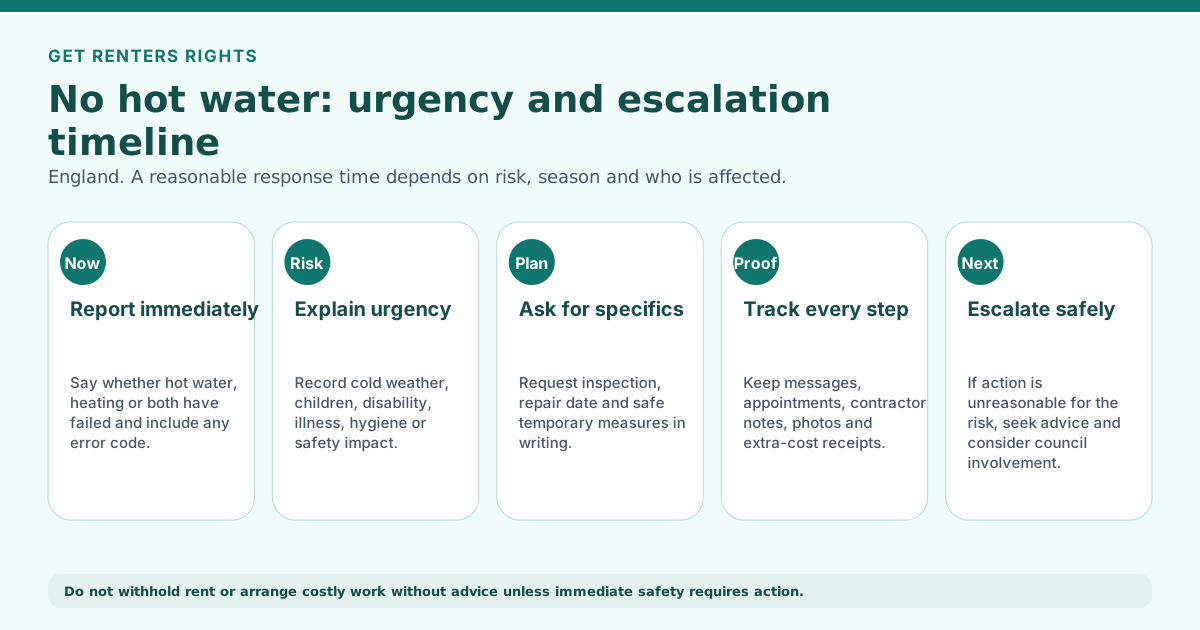
A phone call is useful, but written evidence matters. Email or message the landlord or agent with the date, what is not working, who is affected, and any health or vulnerability issue.
There is no fixed statutory number of days for every private-rental repair. The landlord must act within a reasonable time after being told, and that time becomes shorter where heating is also affected, the weather is cold, or children, disability, illness, or another vulnerability increases the risk.
Ask for an inspection date, a repair date, and safe temporary measures if the permanent repair cannot be completed quickly. Keep each promise and missed appointment in writing.
Do not withhold rent or arrange expensive works without advice. Emergency action may be justified in some cases, but tenants should keep the landlord informed and preserve evidence.
The first written report should be short but specific. Say whether there is no hot water, no heating, or both; whether the boiler shows an error code; whether children, older people, or disabled people are affected; and whether any temporary workaround exists.
This page targets a specific urgent repair search. It links into the wider repairs checker and council escalation pages instead of trying to cover every repair duty or every HHSRS hazard.
A landlord may offer temporary heaters, access to washing facilities, or a short-term workaround. That can reduce immediate risk, but it should not become a substitute for repairing the hot water or heating installation. Ask for both the temporary measure and the repair timetable in writing.
Legal information scope
This is legal information for private renters in England, not legal advice. Court outcomes depend on the documents, dates, evidence, and any procedural steps actually taken.
Related next steps
- Repairs checker
Check repair duty and escalation options. - Landlord won't fix boiler
Read the boiler-specific Q&A. - Council environmental health
Escalate serious repair failures. - How long landlords have to make repairs
Compare urgency, evidence, and safe escalation for other repair types.
Related guidance inside this topic
- If your next step turns on landlord repair duties, read section 11 repair duties guide.
- For the dates, forms, and evidence behind landlord repair duties, see damp and mould repair escalation guide before you respond.
- If this issue overlaps with landlord repair duties, check Black mould in rented property: tenant rights to compare the legal tests.
- For a fuller breakdown of landlord repair duties, use repairs checker for the underlying rule set.
- If you need the route-specific rules on landlord repair duties, start with council environmental health landlord repairs so you can check the dates and documents against your own case.
Sources used for this guide
These are primary legislation and public guidance sources that support the legal-information framework used on this page.
- Landlord and Tenant Act 1985
Primary statute for core landlord repair duties, including structure, exterior, installations, heating, water, gas, and sanitation. - GOV.UK: repairs in private renting
Government guidance on landlord repair responsibilities and what tenants can do when repairs are not carried out. - Shelter Legal: heating and hot water problems
Shelter Legal guidance on landlord responsibility for heating, hot water, and power problems. - Homes (Fitness for Human Habitation) Act 2018
Primary statute adding a fitness-for-human-habitation duty for rented homes in England.
Related articles
- Tenant rights in England: complete guide
The main overview page linking eviction, repairs, deposit protection, rent increases, and illegal eviction rights together. - Renter questions answered
Plain-English answers to the most-asked questions from private renters in England: eviction, deposits, rent increases, repairs, illegal eviction, and pets. - Tenant checklist England 2026
A stage-by-stage checklist for issues before move-in, during the tenancy, and at move-out. - No gas safety certificate? Your eviction rights
How gas safety defects can affect a legacy Section 21 notice and what evidence matters. - Rent repayment order: tenant guide
Rent repayment order tenant guide: when RROs may apply, landlord offences, unlicensed HMOs, illegal eviction, evidence, tribunal route, and limits.
Common questions
- Is no hot water an emergency repair?
- It can be urgent, especially where heating is also affected or vulnerable people live in the property. Report it immediately and ask for a timescale.
- Can I buy heaters or arrange a plumber and bill the landlord?
- Get advice first unless there is immediate risk. Keep receipts and written messages if temporary measures are needed.
- How long can a landlord leave a tenant with no hot water?
- There is no fixed statutory number of days for every case. The landlord must act within a reasonable time, which is shorter where heating is also affected, the weather is cold, or vulnerable people live in the property.
- Should I contact the council?
- Yes, if the landlord does not act and the lack of hot water or heating could affect health or safety.
Use the interactive checker on getrentersrights.com for the full step-by-step result.
