Section 8 notice periods by ground in 2026
Direct answer
A Section 8 notice period depends on the ground used and the notice date. For private tenancies after 1 May 2026, rent-arrears grounds usually require at least 4 weeks, sale or landlord-occupation grounds usually require 4 months, many breach grounds require 2 weeks, and Ground 14 can be used with no minimum notice.
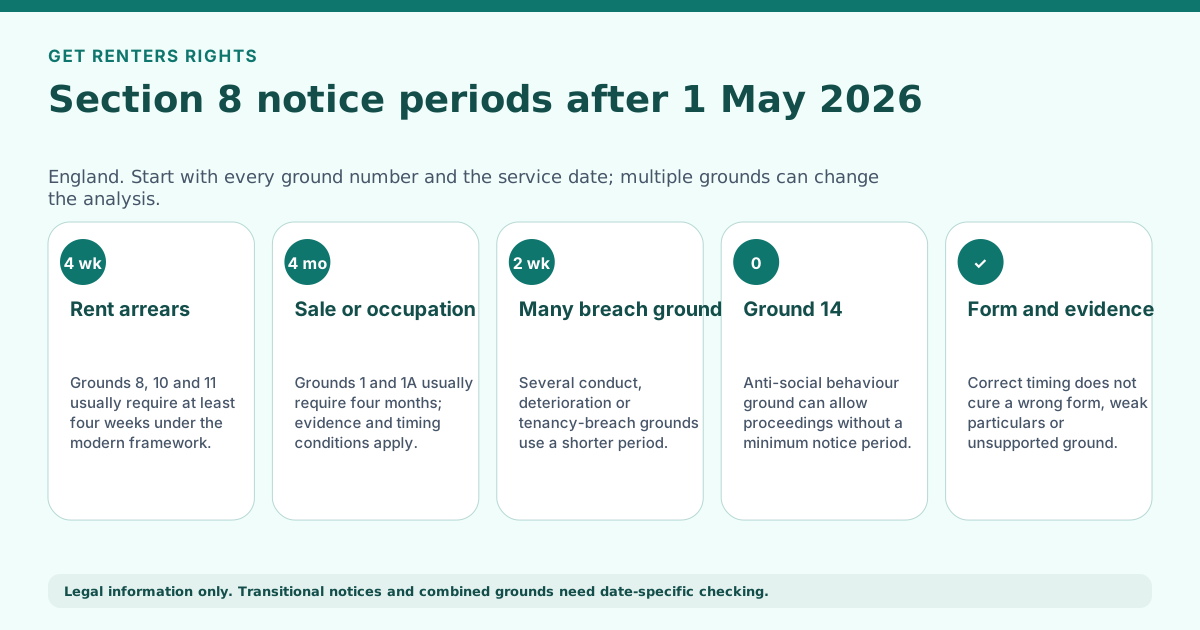
Section 8 is not one single notice period. The landlord must state the possession ground or grounds, and the shortest safe analysis starts with those ground numbers.
If more than one ground is listed, tenants should check the longest minimum period that applies and whether the landlord has explained how each ground is said to apply.
The Renters' Rights Act 2025 changed the private rented sector framework from 1 May 2026. A notice served before that date can sit under legacy rules, while a later notice is assessed under the modern Section 8 framework.
The court process is separate. When the notice period ends, the landlord can usually apply to court, but the notice itself does not remove the tenant from the home.
Check the notice form, ground numbers, service date, possession date, and whether every joint tenant was named or served. A correct notice period does not fix a missing ground, weak particulars, or poor evidence.
Tenants often search for one date, but Section 8 timing has several dates. The service date starts the notice period. The possession date is the date written on the notice. The claim issue date is when the landlord asks the court to start the case. A page or checker that mixes those dates can give the wrong practical answer.
This guide is about how long the landlord must wait before applying to court. The separate time-limit page is about whether a notice has become too old to use. Both issues can matter in the same case, but they answer different questions.
Legal information scope
This is legal information for private renters in England, not legal advice. Court outcomes depend on the documents, dates, evidence, and any procedural steps actually taken.
Related next steps
- Run the Section 8 checker
Check the ground, dates, form, and evidence against your notice. - What invalidates a Section 8 notice?
Read the wider validity checklist. - Eviction timeline
See how notice, court, possession order, and bailiffs fit together.
Related guidance inside this topic
- If your next step turns on Section 8 grounds and possession procedure, read Section 8 notice checker.
- For the dates, forms, and evidence behind Section 8 grounds and possession procedure, see section 8 rent arrears notice period before you respond.
- If this issue overlaps with Section 8 grounds and possession procedure, check rent arrears eviction risk guide to compare the legal tests.
- For a fuller breakdown of Section 8 grounds and possession procedure, use Ground 8 defence guide for the underlying rule set.
- If you need the route-specific rules on Section 8 grounds and possession procedure, start with Section 8 grounds hub so you can check the dates and documents against your own case.
Sources used for this guide
These are primary legislation and public guidance sources that support the legal-information framework used on this page.
- Housing Act 1988
Primary statute for assured tenancies, Section 8 possession notices, Schedule 2 grounds, and legacy Section 21 rules. - Renters' Rights Act 2025
Primary reform statute referenced by these guides for the 2026 private rented sector changes in England. - GOV.UK: ending an assured tenancy
Government guidance for landlords on ending assured periodic tenancies using Section 8 notices and the correct notice period. - Shelter Legal: Section 8 notices
Shelter Legal guidance on Section 8 notice validity, Form 3, particulars, service, notice periods, and time limits.
Related articles
- Section 21 abolished: what happens now?
The transition guide for pre-cutoff notices, the 1 May 2026 changeover, and when possession analysis switches to Section 8. - Can my landlord evict me in 2026?
A route-selection guide for tenants trying to distinguish valid possession, informal pressure, and unlawful eviction. - Section 8 eviction grounds in 2026
The main guide to mandatory and discretionary Section 8 grounds, notice periods, evidence, and court reasoning. - Section 8 notice time limits: when a notice goes stale
How long a Section 8 notice can be used for in England, including post-1 May 2026 12-month time limits and transitional notices before May 2026. - Mandatory vs discretionary Section 8 grounds
Understand the difference between mandatory and discretionary Section 8 grounds, what the landlord must prove, and why reasonableness matters.
Common questions
- Does a Section 8 notice mean I must leave on that date?
- No. The date on the notice is the earliest point when the landlord can usually start court action. A tenant normally does not have to leave unless the court makes a possession order and bailiffs enforce it.
- What if the notice uses several grounds?
- Check the notice period for each ground. Where the landlord relies on multiple grounds, the safest starting point is the longest minimum notice period, but the facts and form still matter.
- Can a wrong notice period make the notice invalid?
- Yes, a notice period that is too short can make a Section 8 notice defective. Minor date issues may be argued about, so keep the paperwork and get advice if court papers arrive.
Use the interactive checker on getrentersrights.com for the full step-by-step result.
