Tenancy deposit protection: rules, deadlines & your rights (2026)
Direct answer
A landlord who takes a tenancy deposit for an assured shorthold tenancy in England must protect it in an approved scheme and serve prescribed information. Missing or late compliance can affect deductions, compensation claims, and legacy Section 21 notices.
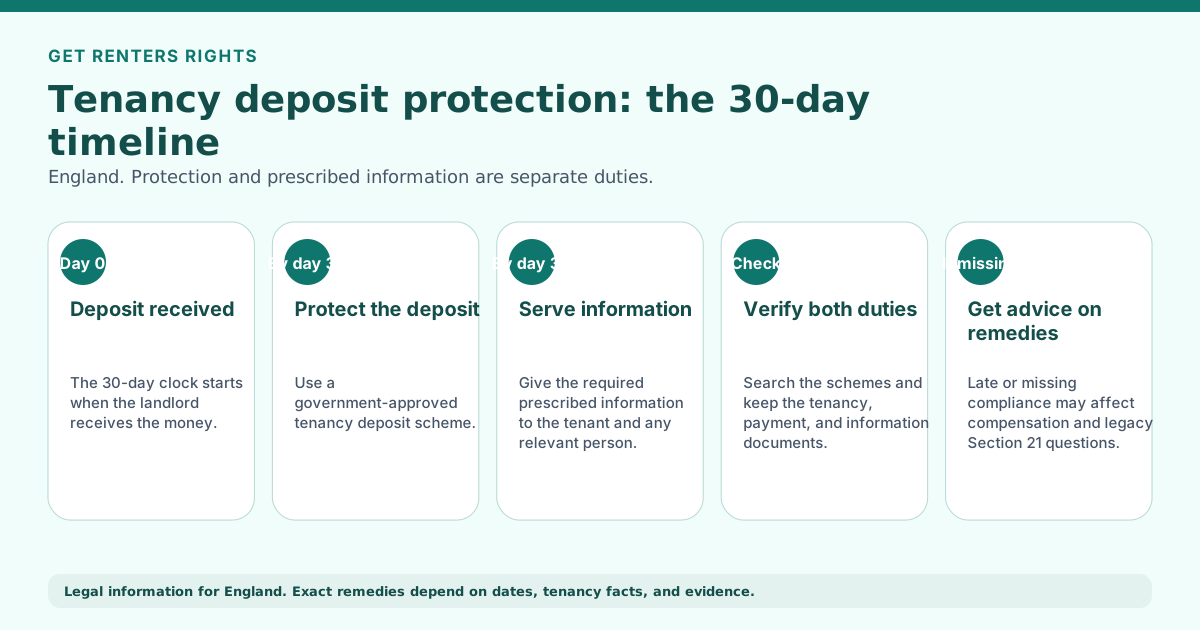
The three approved schemes are the Deposit Protection Service (DPS), MyDeposits, and the Tenancy Deposit Scheme (TDS). You can check all three free of charge using your name and the property address.
Section 213 of the Housing Act 2004 sets two separate duties. First, your landlord must protect the deposit in an approved scheme within 30 days of receiving it. Second, within the same 30 days they must give you the 'prescribed information' - written details of the scheme, the deposit amount, the property address, the parties, how to get the deposit back, when deductions can be made, and the scheme's dispute resolution process. Missing either duty breaks the tenancy deposit protection rules.
If a deposit was not protected within 30 days, the landlord faces a penalty of 1 to 3 times the deposit amount. This right survives even if the deposit has been returned and even if the tenancy has ended - you have up to six years to claim.
The legal requirement: section 213 Housing Act 2004
The current regime continues deposit-protection duties for new assured tenancies and tenancies that were assured shorthold tenancies immediately before 1 May 2026. Within 30 days of receiving a covered money deposit, the landlord must use an authorised scheme and give the prescribed information. Transitional exceptions, including some pre-6 April 2007 or existing non-AST assured tenancies, require separate checking.
- Protect a covered money deposit in one of the three government-approved schemes
- Give the prescribed information to the tenant and any relevant person within the statutory period
The three government-approved schemes
The landlord chooses which scheme to use; the tenant cannot require a specific one. Each offers a custodial model (the scheme holds the money) and an insured model (the landlord holds it but the scheme insures it). You can check all three scheme websites free using your name, the property address, and the approximate tenancy start date.
- Deposit Protection Service (DPS): custodial and insured; free dispute resolution
- MyDeposits: custodial and insured; free dispute resolution
- Tenancy Deposit Scheme (TDS): custodial and insured; free dispute resolution
Prescribed information: what must be served and why it matters
Protecting the deposit is not enough on its own. The landlord must also serve the prescribed information within the same 30 days. If they used the scheme template but left fields blank, or served it to the wrong address, that may still be a failure to serve prescribed information - courts have held that substantial compliance is not the same as proper compliance.
- The name, address, and contact details of the scheme holding the deposit
- The amount of the deposit protected
- The tenancy address and the names of the landlord and tenant
- How the tenant applies for return of the deposit at the end of the tenancy
- The circumstances in which deductions may be made
- The scheme's dispute resolution procedure
Court remedies for non-compliance
If the section 214 statutory conditions are established, the court makes the applicable deposit order and orders a statutory sum between 1 and 3 times the deposit. The court selects the multiplier; there is no mechanical tariff. Late protection does not retrospectively make the original 30-day compliance timely. Legacy Section 21 and the current possession-order gateway use separate conditions, exceptions, and cure rules.
- Use Form N208 only after checking the statutory conditions and current court instructions.
- A returned deposit does not necessarily erase an earlier section 213 breach.
- Limitation and whether tenancy periods create separate claims are fact-specific and should be checked before issue.
What landlords can and cannot deduct from your deposit
Deductions must be reasonable, evidenced, and proportionate, and the burden of proof is on the landlord. The signed check-in inventory and the check-out report are the two most important documents in any dispute; a landlord with no check-in inventory will struggle to prove deductions.
- Can deduct for: damage beyond fair wear and tear, unpaid rent, cleaning to restore the check-in standard, and replacing missing items.
- Cannot deduct for: fair wear and tear such as minor scuffs and carpet fading, pre-existing damage not recorded at check-in, or improvements beyond restoring the original state.
How to dispute deposit deductions: ADR step by step
All three schemes offer free dispute resolution. Both landlord and tenant must agree to use it. The scheme asks both sides for evidence and the resulting decision about the deposit is final within the scheme. Referral, evidence, and decision timetables are scheme-specific.
- Notify the landlord in writing, identifying the deductions disputed and the evidence.
- Contact the scheme promptly because it may impose a referral limit.
- Gather the tenancy agreement, inventories, dated photographs, receipts, and correspondence.
- Follow the current scheme evidence deadline and instructions.
- If both sides do not agree to scheme ADR, obtain advice about the court route.
Free checkers
- Deposit checker
Check whether your deposit was protected, prescribed information served, and whether deductions appear justified. - Tenant rights guide
All eight tenant rights explained with links to the relevant free checker.
Related guidance inside this topic
- If your next step turns on your tenancy, read rent upfront guide.
- For the dates, forms, and evidence behind deposit protection and deduction disputes, see deposit checker before you respond.
- If this issue overlaps with deposit protection and deduction disputes, check Section 21 prescribed information validity guide to compare the legal tests.
- For a fuller breakdown of deposit protection and deduction disputes, use Deposit not protected and Section 21 for the underlying rule set.
- If you need the route-specific rules on deposit protection and deduction disputes, start with deposit compensation claims guide so you can check the dates and documents against your own case.
Sources used for this guide
These are primary legislation and public guidance sources that support the legal-information framework used on this page.
- Housing Act 2004
Primary statute for tenancy deposit protection, HMO licensing, and local authority housing hazard enforcement. - GOV.UK: tenancy deposit protection
Government guidance on deposit protection schemes, deadlines, prescribed information, and dispute routes. - Citizens Advice: housing
Independent advice guidance for private renters, including deposits, rent increases, repairs, eviction, and landlord disputes.
Related articles
- Tenant rights in England: complete guide
The main overview page linking eviction, repairs, deposit protection, rent increases, and illegal eviction rights together. - Renter questions answered
Plain-English answers to the most-asked questions from private renters in England: eviction, deposits, rent increases, repairs, illegal eviction, and pets. - Section 21 validity outcome guides
Primary Section 21 validity hub: all 72 outcome guides from the checker, grouped by deposit protection, prescribed documents, notice timing, licensing, and retaliatory eviction. - Deposit protected late? Section 21 may be invalid
How late deposit protection after the 30-day deadline affects a legacy Section 21 notice. - Tenant checklist England 2026
A stage-by-stage checklist for issues before move-in, during the tenancy, and at move-out.
Common questions
- How do I check if my deposit is protected?
- Check all three scheme websites: depositprotection.com (DPS), mydeposits.co.uk, and tenancydepositscheme.com (TDS). Each has a free tenant search using your name and property address.
- What happens if my landlord didn't protect my deposit?
- You can claim 1 to 3 times the deposit amount in the county court under section 214 of the Housing Act 2004. This applies even if the deposit was later protected out of time, or has since been returned. You have six years from the end of the tenancy to bring a claim.
- Can my landlord keep my full deposit?
- Only in very unusual circumstances. Deductions must be itemised and evidenced. The landlord cannot deduct for fair wear and tear, pre-existing damage, or anything not in the original inventory. Disputes go through the scheme's free ADR process.
- What is prescribed information and what must it include?
- Prescribed information is the written deposit information your landlord must give you within 30 days of receiving the deposit. It must include: the scheme name and address; the deposit amount; the tenancy address; the names of the landlord and tenant; how to apply for return of the deposit; the circumstances in which deductions may be made; and the scheme's dispute resolution procedure.
- What is Section 213 of the Housing Act 2004?
- Section 213 of the Housing Act 2004 is the law that requires your landlord to protect your deposit in an approved scheme and to serve the prescribed information, both within 30 days of receiving the deposit. If they fail either duty, you can claim a penalty of 1 to 3 times the deposit under section 214, and a legacy Section 21 notice is barred under section 215.
- Can a landlord serve a Section 21 if the deposit isn't protected?
- No. Non-protection bars a legacy Section 21 notice under section 215 of the Housing Act 2004. Under the post-1 May 2026 regime, the landlord must use Section 8 anyway, but the penalty claim for deposit non-protection remains available regardless.
Use the interactive checker on getrentersrights.com for the full step-by-step result.